Canvas Redesign
Redesigning Canvas to Support Student Motivation
2025
Overview
Qualitative research revealed that many students disengage from education not due to cost, but because learning feels abstract and disconnected from real-world goals.
This project redesigns Canvas to increase motivation through personalization, skill visibility, and interest-driven exploration.
The Problem
Literature review revealed consistent decrease of secondary education enrollment and increase of tuition rates.
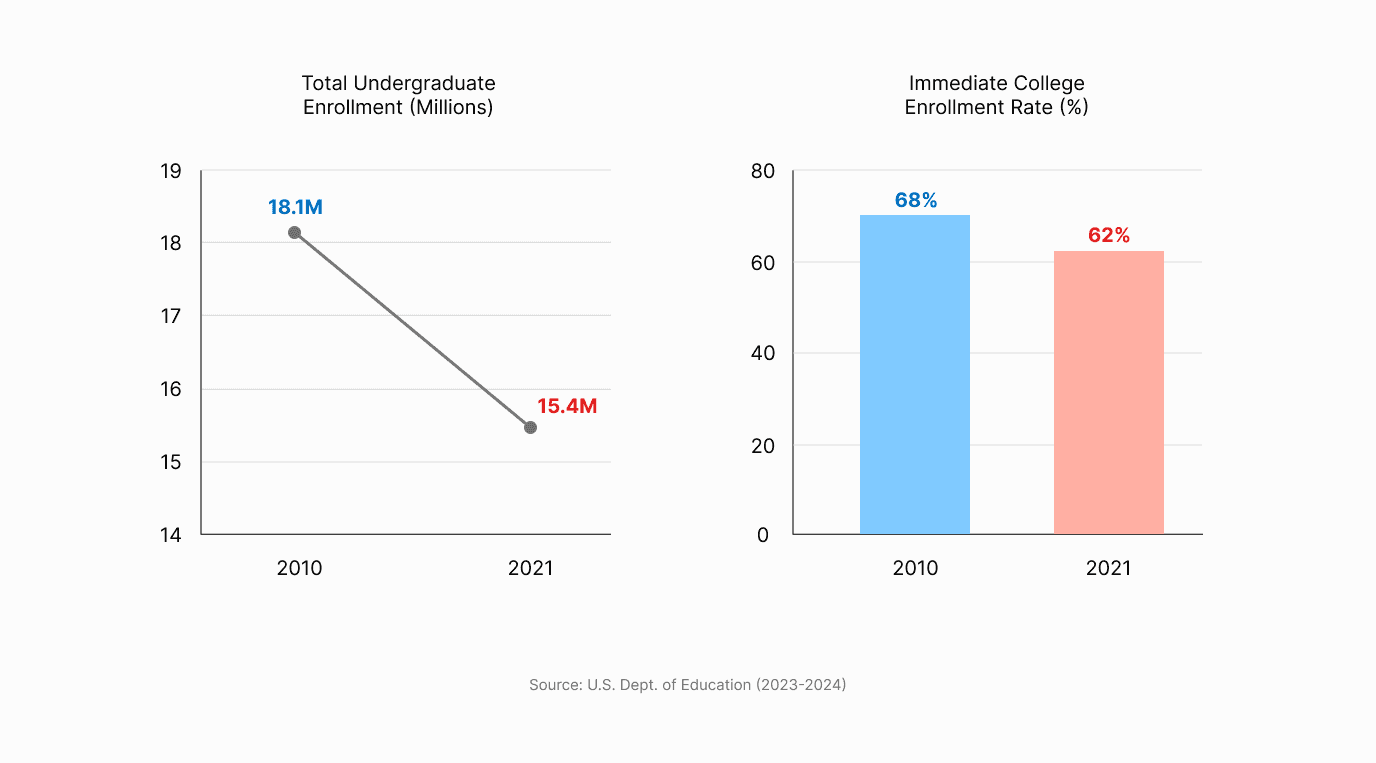
Total undergraduate enrollment ↓ 2.7 Million students
Immediate college enrollment rate ↓ 6%
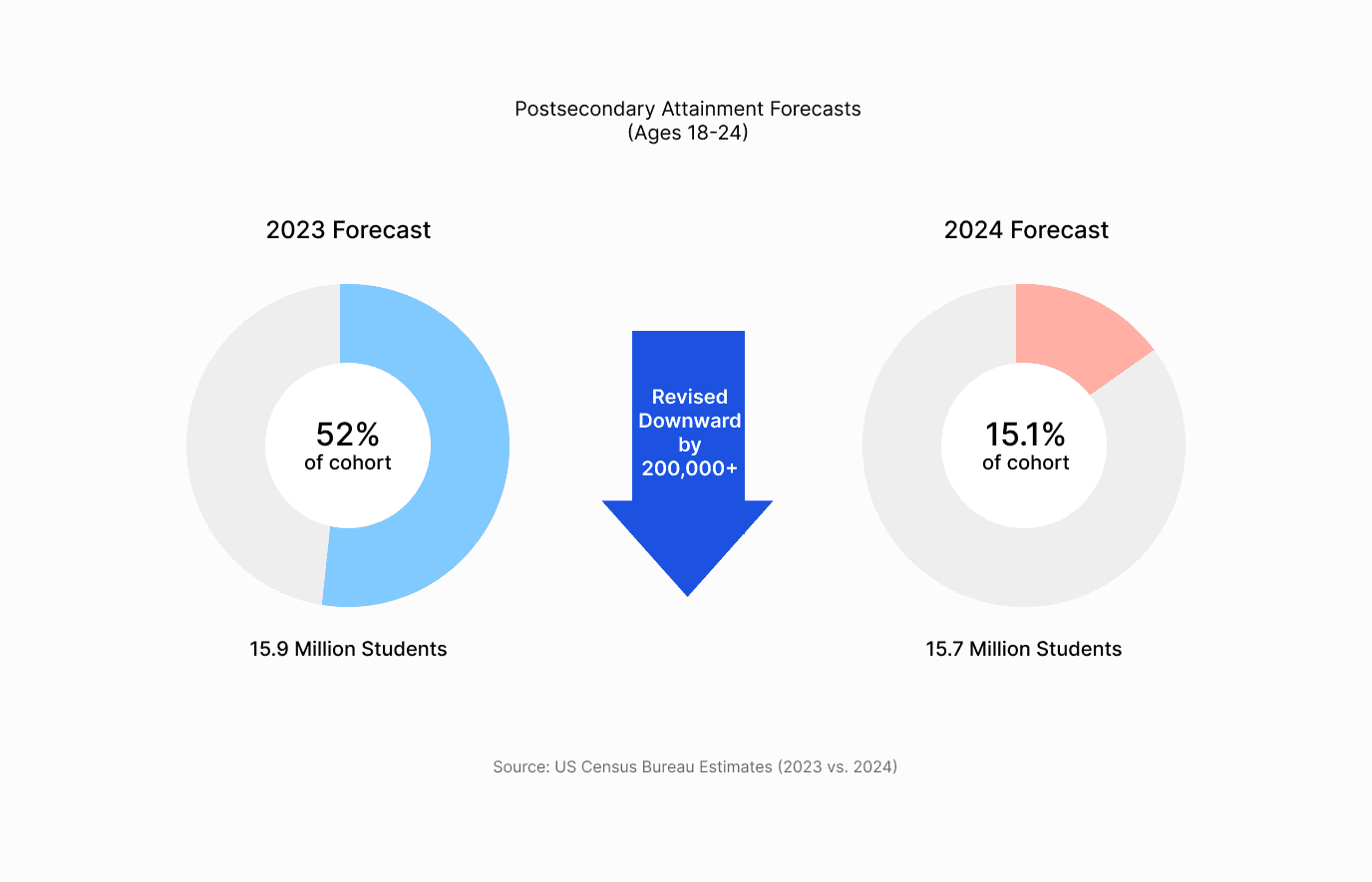
Postsecondary enrollment forecast ↓ 200,000 students
52% of 2023 cohort → 15.1% of 2024 cohort
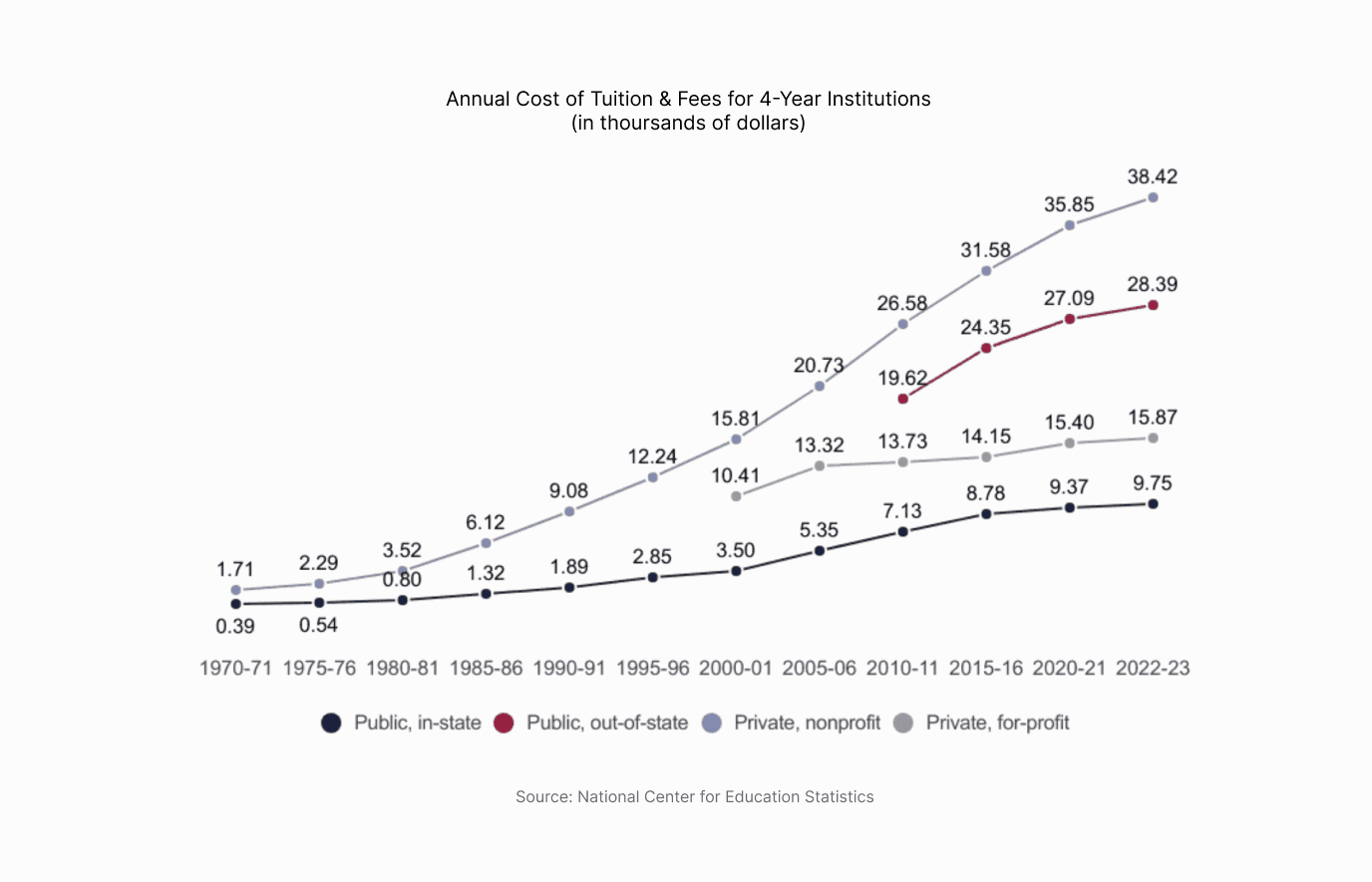
Tuition increased 158% since 1990 (adjusted for inflation)
60% of graduates carry debt (U.S Department of Education)
We initially hypothesized that financial burden was the primary barrier deterring high schoolers from pursuing a degree.
“How might we help students who are deterred by the financial costs of higher education?”
To validate this hypothesis,
we sat down with high schoolers and counselors.
And that’s where the narrative changed.
Qualitative Research
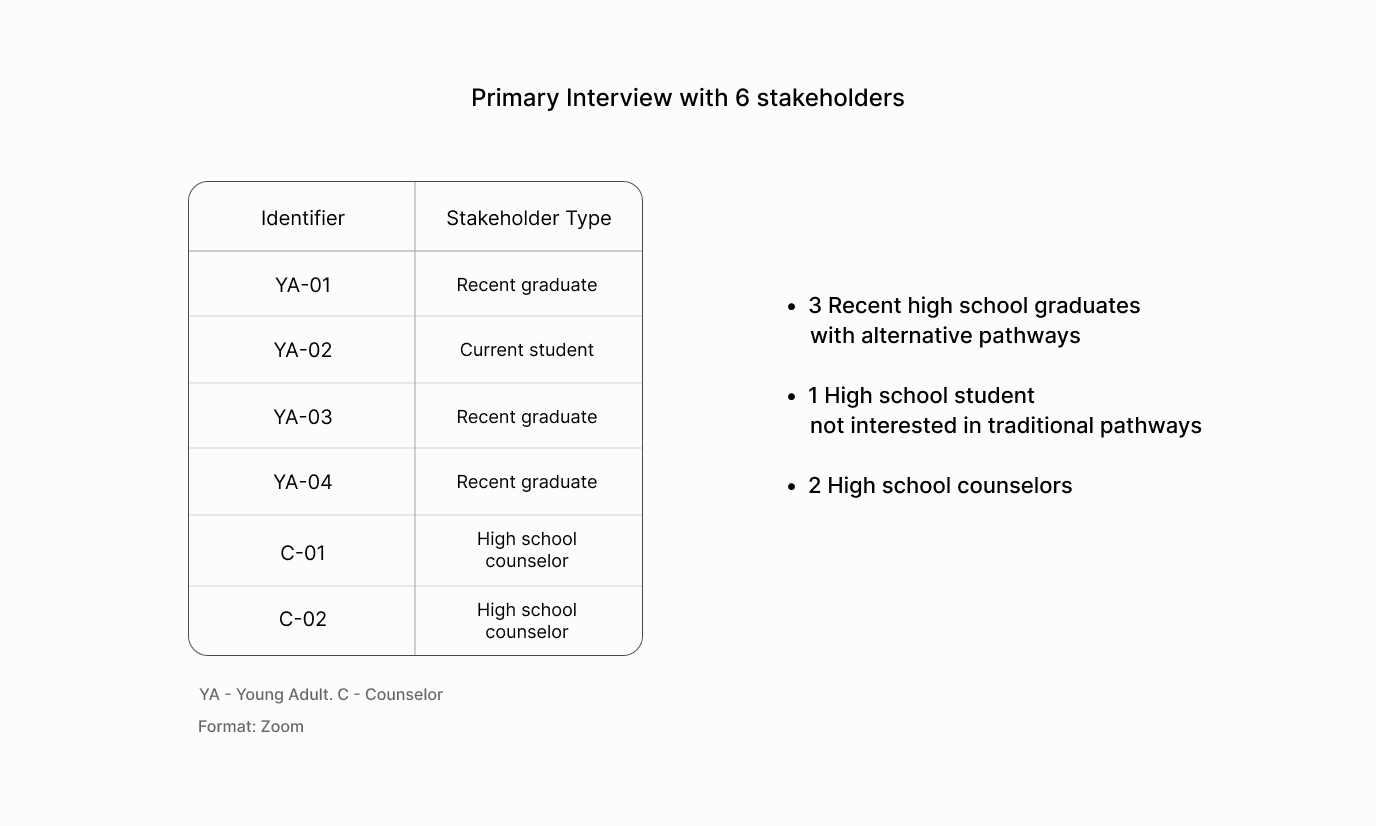
We conducted semi-structured interviews with 6 stakeholders.
To interpret our data, we applied a four-level affinity diagram analysis:
raw quotes, themes, meta clusters, and root causes.
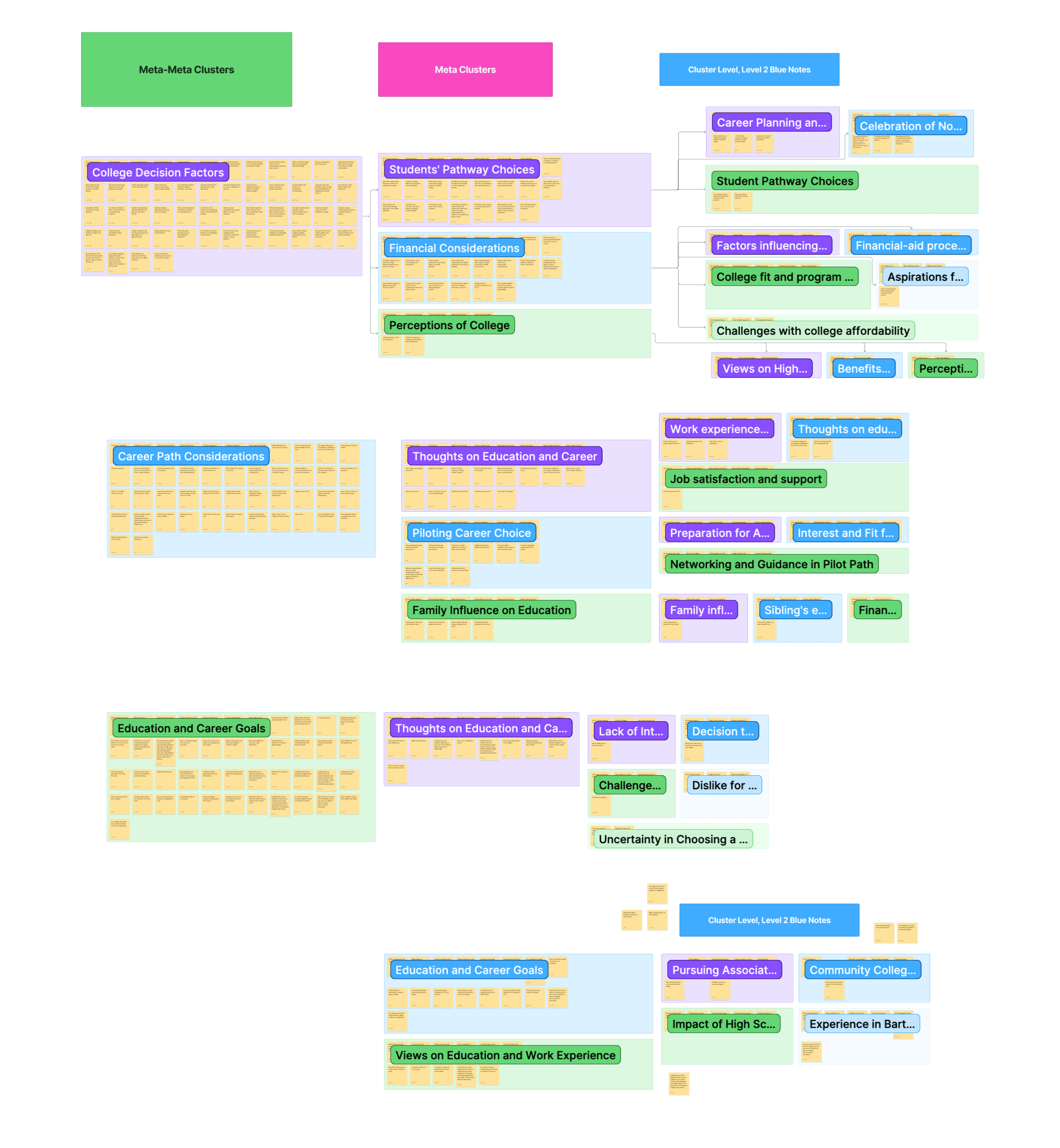
Analysis
The Shocking Discovery:
If our assumption had been correct, we expected students to talk about tuition burdens. Instead, while cost was a concern, it wasn't the "dealbreaker." Students were choosing alternative pathways primarily because they felt “classes were boring,” “I do not like school,” and “I want hands-on practice”
Students seldom described college as unaffordable;
instead, they described it as unappealing.
Interview Findings
Traditional schooling fails to spark genuine interest, leaving many students disengaged and uncertain about their future paths
1.
Traditional high-school education provides limited real-world experiences
YA01
Really didn’t like school
YA02
A lack of clear personal interest or passion is another major factor
C01
Engaging experience directly related to careers is a crucial criteria for deciding pathways
2.
Career exploration workshops and digital tools are highly valuable
YA01
More interactive tools could further engage students in decision-making
C02
Students choosing alternative paths prefer hands-on learning
C01
High School Provides broad academic guidance but lacks personalized and practical preparation for real-world decisions
3.
The high school system kids to be in their shells
YA03
Doesn’t think high school prepared for him for his desired profession
YA02
These findings shifted our narrative:
financial pressure is a barrier, but lack of interest is the true wall.
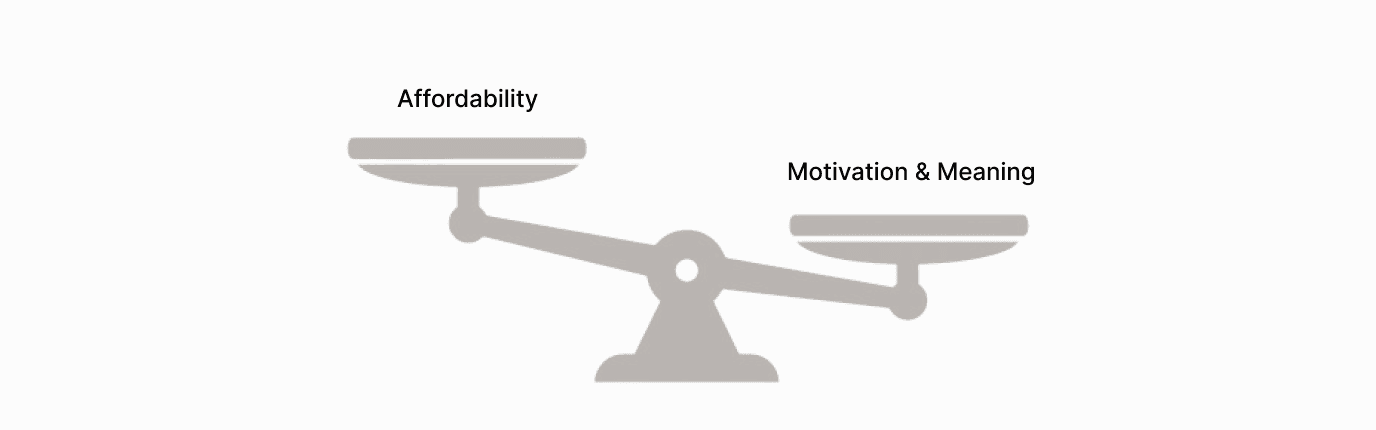
How might we make learning more engaging and enjoyable to help young adults to motivate them to further pursue higher education?
Initial Question:
↓
“How might we help students who are deterred by the financial costs of higher education?”
_______________________________________________________________________________________________________
Client Feedback & Iteration
We iterated on our problem definition to ensure the solution provided value to both the stakeholders and our client, Intsructure.
Advice:
Connect the problem more clearly to Instructure’s mission.
Our Response:
Reframed the solution as a way for Instructure to increase user retention and expand its ecosystem by capturing students who would otherwise follow non-traditional paths.
Feedback 1
↓
Advice:
Emphasis on the need for scalability, feasibility and sensibility to the instructor workload using Canvas
Our Response:
Criteria integrated in the Pugh Matrix for the ideation selection process
Feedback 2
↓
Advice:
Design solutions from curiosity → motivation → persistence
Our Response:
Ideation of features that could genuinely help students re-engage with learning
Feedback 3
↓
Recommendations
Based on our findings, we developed three user experience design recommendations that aim to increase learner motivation by helping students feel more ownership, clarity, and curiosity within their educational journey.
1. Personalized Dashboards:
Supporting Identity, Ownership, and Emotional Engagement
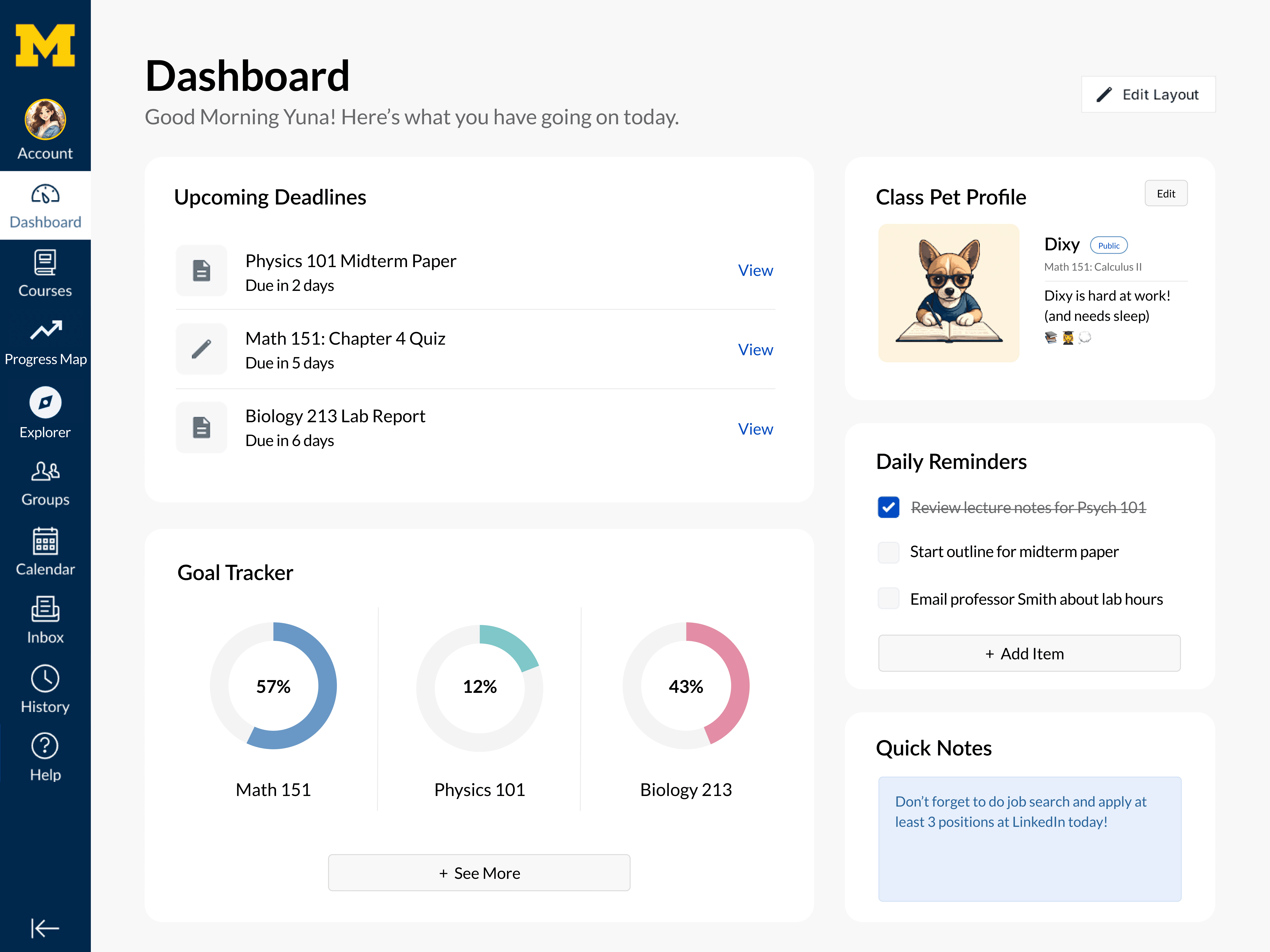
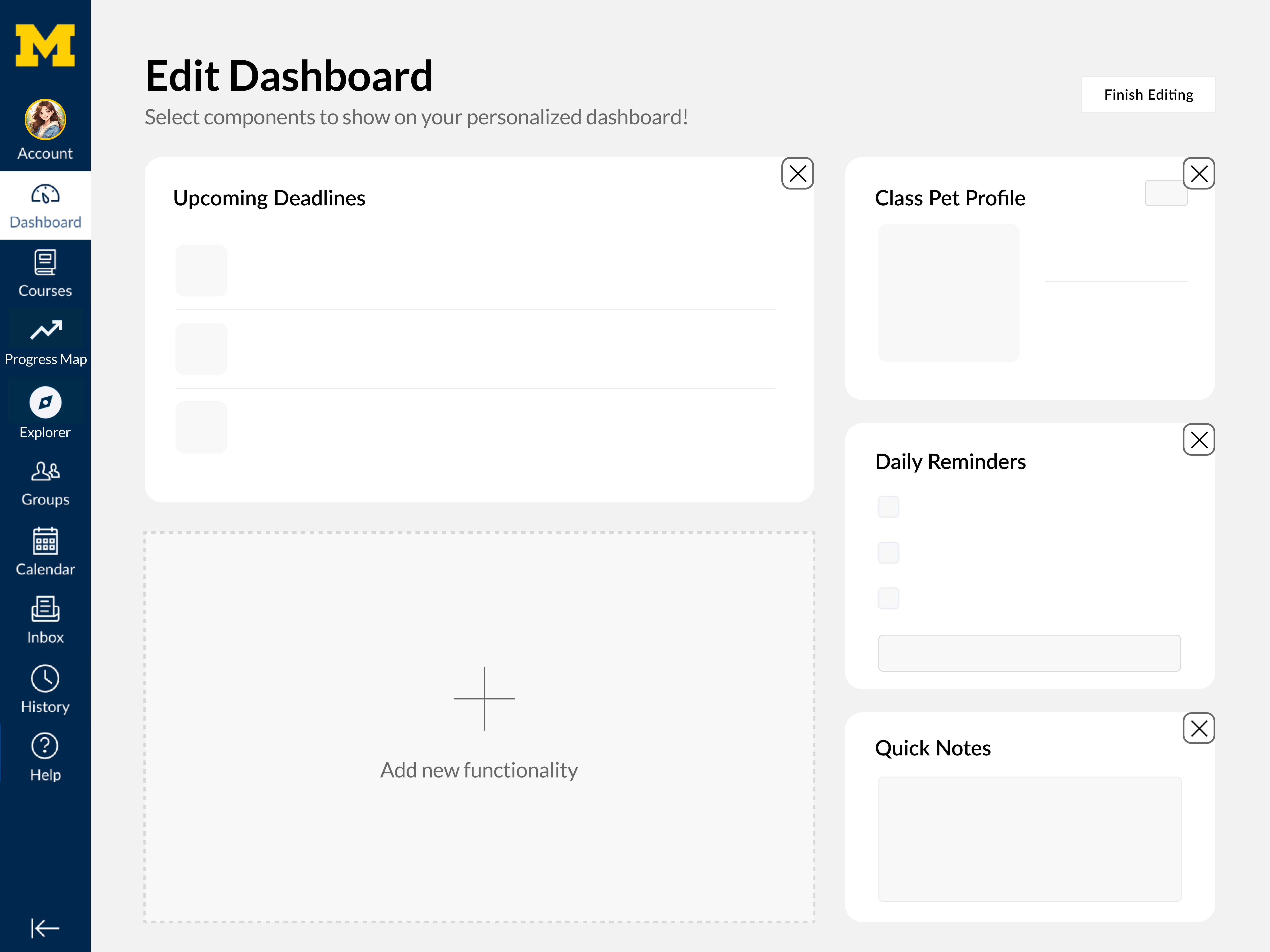
Limited but meaningful personalization:
Students can select themes, arrange modular widgets, and choose an avatar that reflects their identity. This mirrors the simplicity of smartphone home-screen customization, which research shows can support feelings of competence and belonging without introducing distraction.
Low-friction utility widgets:
Notes, daily reminders, goal tracking, and upcoming deadlines appear in a consolidated space. These tools already exist within Canvas but are scattered; centralizing them improves usability without adding new burdens for instructors.
Identity-supportive elements:
Avatar reactions, badges, and class pets provide subtle motivational cues without veering into heavy gamification.
Optionality:
All personalization features are opt-in, respecting differing student preferences and institutional cultures.
2. Progress Maps & Skill Pathways
Making Learners Understand the “Why” Behind Coursework
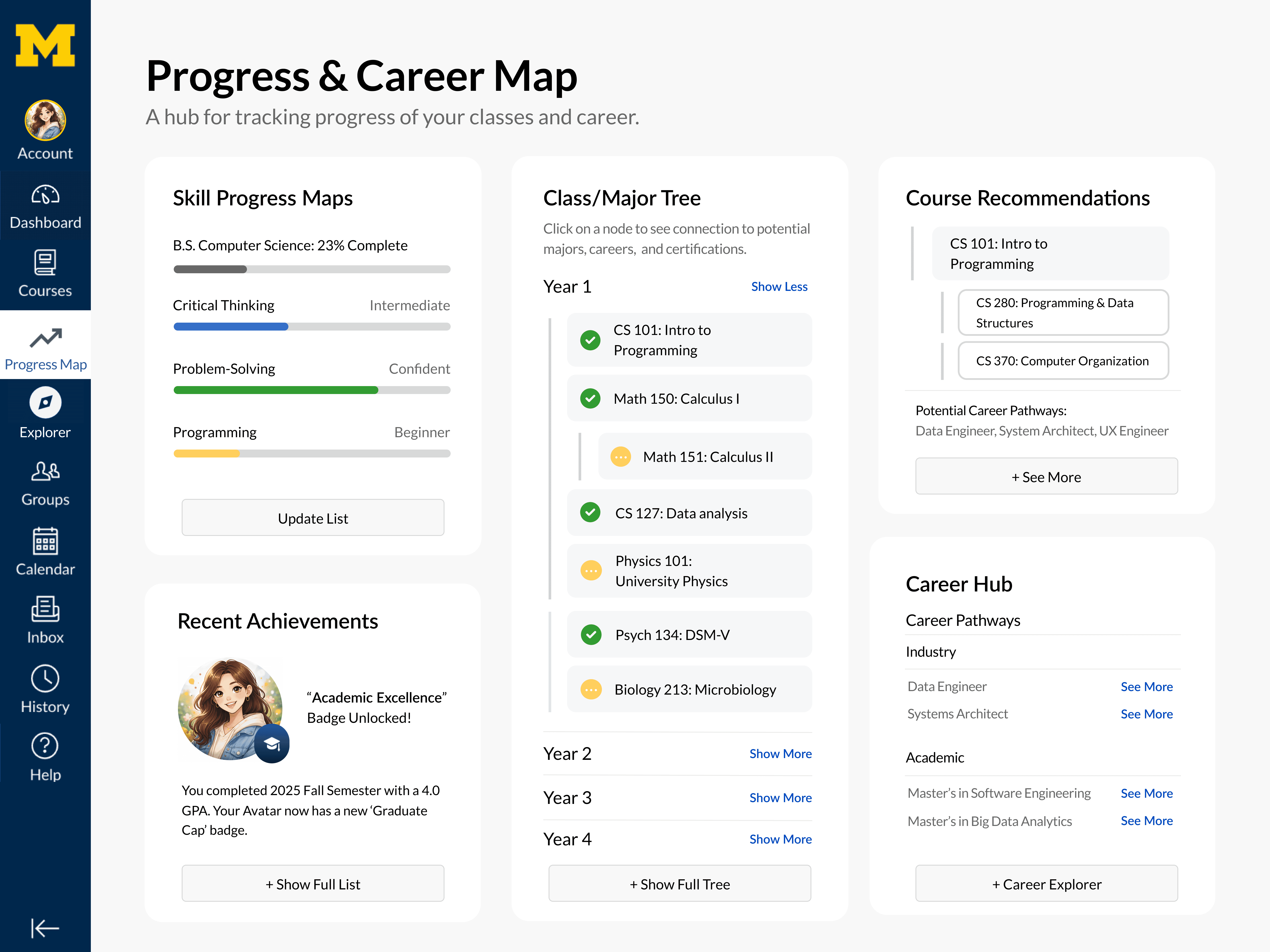
Skill-based progress visualization:
Instead of simply showing percentages of course completion, the Progress Map highlights competencies students gain, such as problem-solving, writing, or technical skills.
Pathway mapping:
Students can view how current classes connect to potential majors, careers, or certifications. This reduces uncertainty and helps students imagine their future selves.
Optional motivational elements:
Unlockable avatar accessories or milestone markers provide a gentle encouragement mechanism without compromising academic seriousness.
Alignment with Canvas Careers:
Because Instructure already invests in career-readiness tools, this feature leverages existing infrastructure while visually enhancing it.
3. Interest-Exploration Micro-Modules
Sparking Curiosity Through Hands-On Experiences
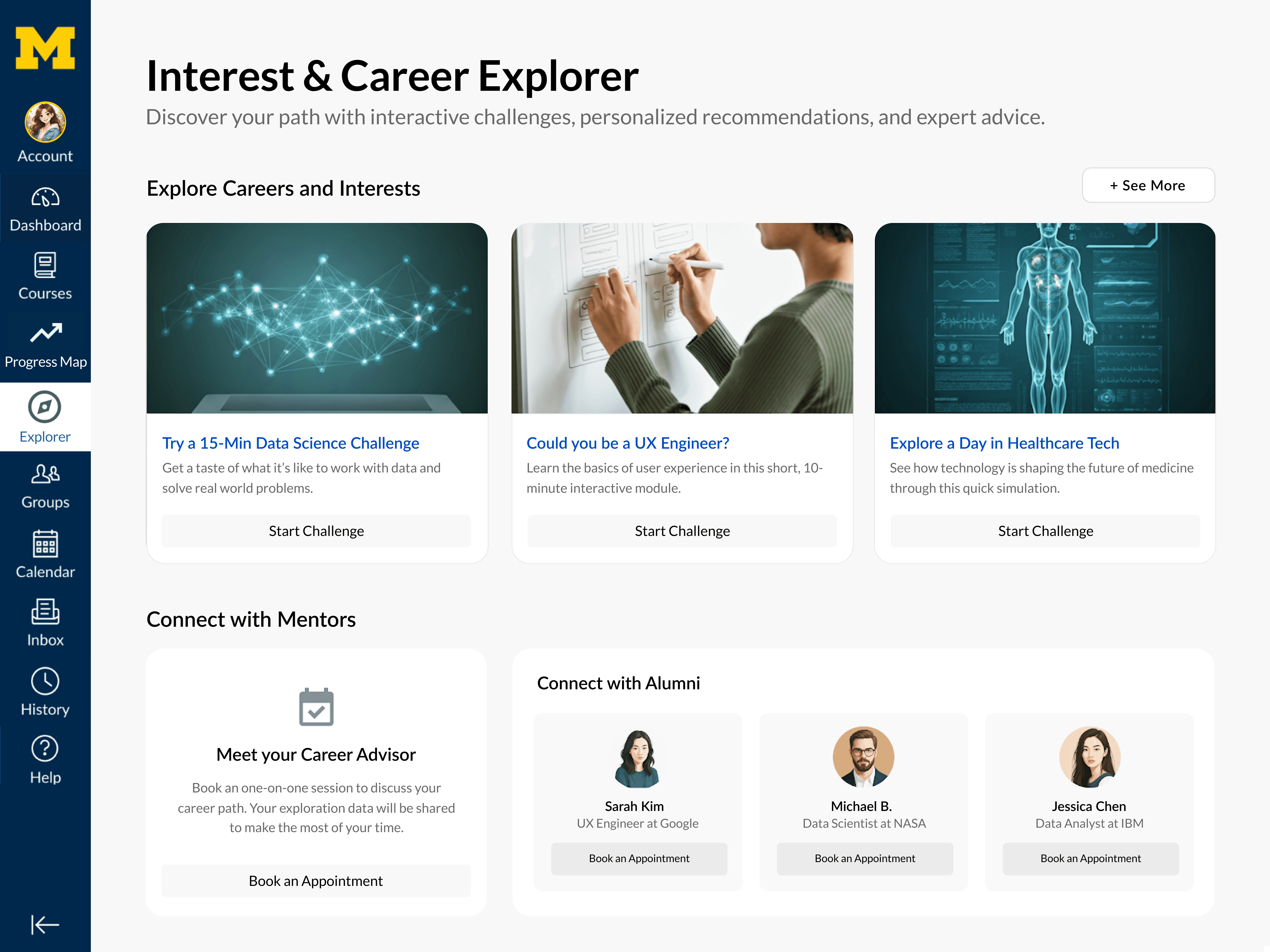
10–20 minute interactive challenges:
These small, digestible experiences lower the barrier to exploration and allow students to “test drive” areas of interest.
Scenario-based prompts:
Instead of asking students to define what they want to be, modules present situations to help them recognize preferences through action.
AI-assisted module builder:
Instructure can leverage AI to help educators create new modules quickly, reducing instructor workload.
Integration with alumni and counselors:
If students enjoy a module, they can easily book appointments or request advice from listed alumni, creating a direct pathway from curiosity to opportunity.